Compression classes explained
What do CCL 1 to CCL 4 mean? An overview of pressure ranges, lengths and stocking types – and why class 2 and higher should be chosen with your doctor.
By Novamed · Last updated November 22, 2026

Medical compression stockings are available in different compression classes. The class tells you how much pressure the stocking applies at the ankle. This guide explains what the classes mean, which lengths and versions exist and what to keep in mind when putting the stockings on and caring for them. It provides general information and does not replace advice from your doctor.
How medical compression stockings work
A medical compression stocking applies graduated pressure: it is highest at the ankle and gradually decreases towards the knee and thigh. This pressure profile is designed to support the return flow of blood in the leg veins towards the heart. Many wearers find that their legs feel lighter at the end of the day.
What matters is not how tight a stocking feels, but the pressure measured at the ankle. It is stated in millimetres of mercury (mmHg).
The compression classes at a glance
In Germany, the pressure ranges are defined by the RAL-GZG quality standard. The values refer to the pressure at the ankle:
| Class | Pressure at the ankle | Typically recommended by the doctor for, e.g. |
|---|---|---|
| CCL 1 | 18–21 mmHg | tired, heavy legs, a slight tendency to swelling, early varicose veins |
| CCL 2 | 23–32 mmHg | more pronounced varicose veins, a marked tendency to swelling, after vein procedures |
| CCL 3 | 34–46 mmHg | severe venous conditions with considerable swelling |
| CCL 4 | 49 mmHg and more | very pronounced swelling, for example with lymphoedema |
The right-hand column only shows common examples. Which class is right for you depends on your individual situation and is decided by your doctor.
Other countries use other standards – the French and British standards, for example, have their own class scales. The same class number can therefore stand for a noticeably different pressure. When comparing stockings, always look at the mmHg value at the ankle, not the class number.
Class 2 and higher: choose with your doctor
Class 1 is often used for mild complaints. From compression class 2 upwards, please choose your stocking together with your doctor. The same applies after an operation and if you have pain, swelling, diabetes or circulation problems. A doctor or a specialist retailer measures your legs and advises you on class, length and fit. Our guide to finding the right size explains how to measure correctly.
Lengths: AD, AG and AT
The abbreviations refer to measuring points on the leg: A at the foot, D below the knee, G at the top of the thigh and T at the waist.
- AD – below-knee stocking: ends just below the knee; often chosen when the complaints mainly affect the lower leg.
- AG – thigh-length stocking: reaches the top of the thigh and is usually held in place by a hold-up band.
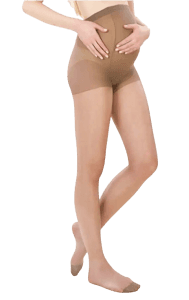
- AT – pantyhose: covers both legs up to the waist.
Which length you need depends on the area that requires compression – your doctor will specify it.
Open or closed toe
A closed toe covers the whole foot like an ordinary sock. With an open toe the toes stay free – some people prefer this, for example if their toes are sensitive to pressure or to wear their own socks over the stocking. Examples from our range: the CCL 1 below-knee stocking NV.600, the CCL 2 below-knee stocking with open toe NV.670 and the CCL 3 below-knee stocking NV.720.
Ready-made or made-to-measure
Ready-made stockings come in standard sizes and fit many legs with typical proportions. If your measurements fall outside the size chart or the shape of your leg is very irregular, a made-to-measure stocking may be needed. Your doctor or a specialist retailer can advise you.
Support, travel and compression stockings: the differences
- Support stockings apply lighter pressure and are not classified according to the medical compression classes. They are intended for everyday wear, for example if you stand or sit a lot.
- Travel stockings are designed for long journeys by plane, coach or car, when you sit still for hours. You will find them under travel socks.
- Medical compression stockings have a defined pressure profile in a specified class – see our compression stockings. For pregnancy there are maternity compression stockings; please discuss their use with your doctor or midwife.
- Anti-embolism stockings are a different product. They are designed for bedridden patients, for example in hospital before and after an operation, and are used on medical advice. They do not replace a medical compression stocking worn during the day.
Tips for putting on and care
- Put the stockings on in the morning, right after getting up – that is usually when your legs are least swollen.
- Rubber gloves give you a better grip and protect the knitted fabric from fingernails and rings.
- Turn the stocking inside out down to the heel, slip your foot in and then work the stocking up your leg bit by bit. Do not pull on the top edge, and make sure there are no creases.
- Wash the stockings regularly, for example at 40 °C on a delicate cycle if the care label allows. Do not use fabric softener and do not dry them on a radiator.
- The pressure decreases over time. It is commonly recommended to replace a stocking after about six months of daily wear. Always follow the care label and the instructions for use.
When to ask your doctor first
Please talk to your doctor before wearing compression stockings if you have, for example:
- circulation disorders of the arteries in the legs
- heart failure
- skin infections, weeping skin conditions or open wounds
- loss of sensation in the legs, for example due to diabetes
- swelling or pain without a known cause
If you notice pain, numbness, tingling, skin discolouration or skin irritation while wearing the stockings, take them off and contact your doctor.
Need help choosing?
You will find our whole compression range in this category. If you have questions about a product, our team is happy to help – simply use our contact page. For medical questions, your doctor or a specialist retailer is the right point of contact.
Frequently asked questions
Which compression class is right for me?
Your doctor decides, based on your individual situation. Class 1 is often used for mild complaints such as tired, heavy legs. From class 2 upwards, please choose the stocking together with your doctor.
Why do stockings from other countries have different class numbers?
Germany (RAL-GZG), France and the UK each use their own class scale, so the same class number can mean a different pressure. Always compare the mmHg value at the ankle.
Do I need to wear compression stockings at night?
Medical compression stockings are usually worn during the day and taken off in the evening. Your doctor will tell you how long you should wear them.
How often should I replace my compression stockings?
The pressure gradually decreases with wear and washing. Replacing them after about six months of daily wear is commonly recommended; follow the care label and the instructions for use. Many people alternate between two pairs.
Is a travel stocking a medical compression stocking?
Not necessarily. Travel stockings are designed for long periods of sitting on journeys. If your doctor has recommended a specific compression class, choose a medical compression stocking in that class.