How to measure your size correctly
Compression stockings and supports need to fit well. Here is how to measure at home – with the right tools, at the right time and at the right points.
By Novamed · Last updated November 22, 2026

A compression stocking or a support can only do its job properly if the size is right. Too tight, and it pinches and constricts; too loose, and it slips and gives too little compression or support. The good news: measuring takes only a few minutes. This guide explains what you need, when to measure and which points matter.
What you need
- A flexible tape measure in centimetres, such as a tailor's tape – not a rigid metal tape.
- A helper, especially for the leg lengths and the thigh. If you bend down to measure yourself, the values quickly become inaccurate.
- A mirror to check that the tape sits straight.
- Pen and paper to note each value straight away – left and right separately.
When and how to measure
- In the morning. Legs often swell over the course of the day. For compression stockings, ideally measure right after getting up, before any swelling has had time to develop.
- On bare skin – not over trousers, tights or an old stocking.
- Standing upright with your weight on both feet, unless the product's size chart asks for a different position, for example with the knee slightly bent.
- Snug, not tight. Place the tape horizontally around the limb so that it lies flat on the skin without denting it. Don't pull it tight.
- Measure twice. If the values differ, measure a third time.
- Each side separately. Legs and arms are often not identical, so measure and note them individually.
Compression stockings: the measuring points
Compression stockings are sized by circumferences at defined points on the leg and, depending on the model, by leg lengths. Size charts use short codes for this: c stands for circumference, l for length. Which values you need depends on the length of the stocking.
| Measuring point | Where | Needed for |
|---|---|---|
| cB – ankle | at the narrowest point, just above the ankle bones | all stockings |
| cC – calf | at the widest point of the calf | all stockings |
| cD – below the knee | just below the knee joint, under the hollow of the knee | below-knee stockings |
| cG – thigh | at the top of the thigh, a few centimetres below the groin | thigh-length stockings |
| lD – length to below the knee | from the floor up to point cD | below-knee stockings |
| lG – length to the thigh | from the floor up to point cG | thigh-length stockings |
Measure the lengths standing barefoot on a hard floor, with the tape running straight up the side of the leg. Then compare all values with the size chart on the product page. Ideally, every circumference falls within the same size. If your ankle matches one size and your calf another, a standard size may not fit well – in that case, please get advice before you order (see below).
You'll find our models in the compression stockings category, for example the class 2 below-knee compression stocking (NV.660). What the classes mean is explained in our guide to compression classes.
Knee supports
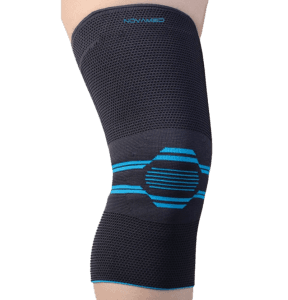
Knee supports are usually sized by the circumference around the middle of the kneecap. Some size charts also ask for a circumference a set distance above and/or below the kneecap, and some specify whether the leg should be straight or slightly bent. Because these measurements differ from product to product, always use the size chart on the product page – for example for the elastic knee support NV.6100. Browse all models under knee supports, and find help choosing the right type in our guide how to choose a knee support.
Wrist, ankle, elbow and back supports
For all other supports, measure the circumference at the point named on the product's size chart. Typical examples:
- Wrist supports: usually the circumference around the wrist – see wrist supports.
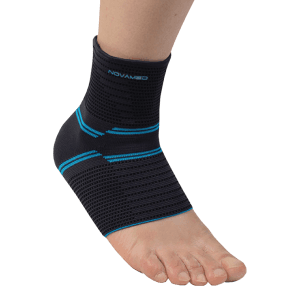
- Ankle supports: usually a circumference at the ankle; some charts name a different point – see ankle supports.
- Elbow supports: the circumference around the elbow or just above or below it.
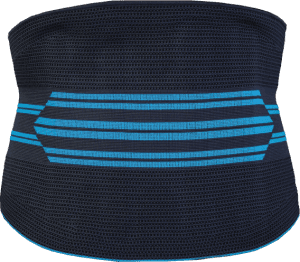
- Back supports: usually the waist or hip circumference at a defined height.
The size chart on the product page always takes precedence. We deliberately don't publish general size tables here, because every product is cut differently.
Between two sizes?
- Supports: the larger size is often more comfortable, especially if you wear the support for long periods. A support that is too loose, however, gives less stability. If in doubt, contact us or ask a specialist retailer.
- Compression stockings: don't simply go up a size, because graduated compression is only distributed as intended when the circumferences match. Ask a specialist retailer or your doctor.
When a specialist should measure you
In the following cases, have your measurements taken by a specialist retailer (such as a medical supply store or a pharmacy with a measuring service) or by your doctor:
- you need a medical compression stocking of class 2 or higher,
- your measurements don't match any standard size and you may need a made-to-measure stocking,
- your legs are severely swollen or the swelling varies a lot,
- after surgery or an injury,
- you have pain, diabetes or circulation problems.
Please ask your doctor before wearing compression if you have arterial circulation disorders, heart failure, skin infections or open wounds, or loss of sensation in your legs.
Re-measure regularly
Your measurements aren't fixed for life. Measure again after a significant change in weight, if swelling has noticeably changed, and ideally before every new order. It only takes a few minutes and helps your next stocking or support fit just as well as the first one.
Questions about a size chart? Write to us – we're happy to help.
Frequently asked questions
Can I measure myself without a helper?
You can easily measure the circumference of your ankle, calf or wrist yourself with the help of a mirror. For the leg lengths and the thigh, a helper gets more accurate results, because bending down changes your posture and the values.
Why should I measure in the morning?
Legs tend to swell over the day, especially after long periods of standing or sitting. Compression stockings are fitted to the leg in its least swollen state, which is why measuring right after getting up is recommended.
My legs have different measurements. What should I do?
Small differences are normal. Check on the size chart which size each leg falls into. If your legs fall into different sizes or the difference is large, ask a specialist retailer or your doctor for advice.
Can I go by my clothing or shoe size?
No. Compression stockings and supports are sized by circumferences and lengths at specific points. Clothing and shoe sizes don't reliably reflect these and often lead to the wrong choice.
How tight should the tape measure be?
Snug but not tight: the tape lies flat on the skin all the way round, doesn't dent it and can still be moved slightly. A tape pulled too tight gives values that are too small – and therefore a product that is too tight.